

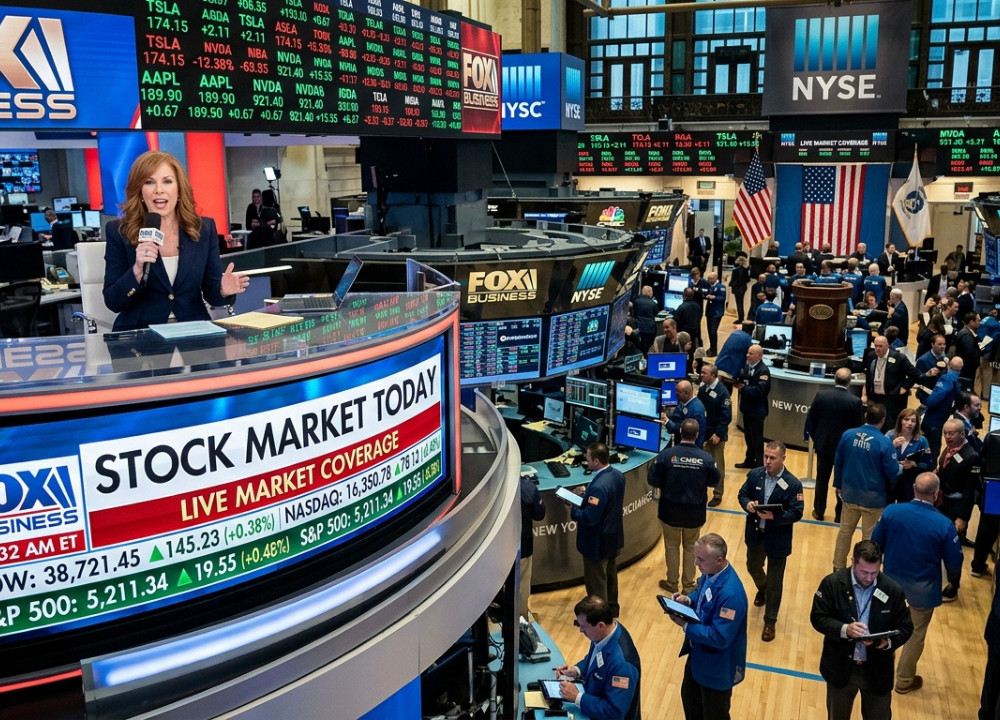
The fox business stock market is a useful topic for readers who want to stay informed about stocks, financial markets, business developments, and major economic events. Fox Business is known for covering financial news and market activity, making it a familiar destination for people looking to understand what is happening across Wall Street and the broader economy.
However, following financial news effectively involves more than checking whether markets are up or down. Investors and beginners need to understand stock prices, market indexes, economic indicators, company earnings, volatility, and the difference between reported facts and opinions.
This guide explains how to approach fox business stock market coverage, what information to look for, how to understand common market terms, and how to use financial news as part of a broader research process.
What Is the Fox Business Stock Market Coverage?
The fox business stock market coverage refers to financial and market-related information presented through Fox Business. This type of coverage can include stock-market movements, business news, economic developments, corporate announcements, market commentary, and analysis. A financial news platform does not operate the stock market itself. Instead, it reports and analyzes events taking place in financial markets. For example, market coverage may discuss changes in major indexes, movements in individual companies, interest-rate decisions, inflation reports, employment data, or significant corporate earnings.
What Information Can You Find?
Depending on the market and current events, financial coverage can include:
- Individual stock prices and movements
- Major stock market indexes
- Corporate earnings reports
- Economic indicators
- Interest-rate developments
- Market volatility
- Business and industry news
- Analyst commentary
- Investor sentiment
- Major financial events
Why Follow Fox Business Stock Market News?
One reason people follow the fox business stock market is to keep up with developments that could influence investor sentiment. Stock markets can respond quickly to new information. A company’s earnings announcement, a change in interest-rate expectations, or an important economic report can affect prices within a short period.
Stay Updated on Market Movements
Regular market coverage can help readers understand what is happening during a trading session. Instead of seeing an unexplained price change, readers can look for news or economic developments that may provide context. That does not mean every price movement has one obvious cause. Markets are influenced by many factors at the same time.
Understand Business and Economic News
Business news and financial markets are closely connected. Changes in consumer demand, company profits, borrowing costs, government policy, or global economic conditions can affect businesses and investor expectations.
Compare Different Market Perspectives
No single financial publication should be treated as the only source of information. Investors can benefit from comparing reporting from multiple reputable sources and checking primary information when appropriate. This approach can help distinguish widely confirmed facts from commentary or speculation.
How to Follow Fox Business Stock Market Updates
Following the fox business stock market does not require checking every headline throughout the day. A more organized approach can make financial information easier to understand.
Start With Major Market Updates
Begin by looking at broad market movements. Major indexes can provide a quick overview of whether a particular trading session has generally been positive, negative, or mixed. From there, readers can investigate the companies or sectors responsible for notable movements.
Track Individual Stocks
If you are researching a particular company, look beyond its current share price. Consider earnings, revenue, business developments, industry conditions, valuation, and recent company announcements.
Watch Market-Moving Events
Several events commonly receive significant attention in financial reporting:
- Federal Reserve decisions
- Inflation reports
- Employment data
- Corporate earnings
- Mergers and acquisitions
- Regulatory announcements
- Major geopolitical developments
- Changes in commodity prices
How Beginners Can Read Stock Market Information
For someone new to investing, the fox business stock market can appear complicated because financial reporting often uses specialized terminology. The good news is that most important concepts can be learned gradually.
Understanding Stock Prices
A stock price represents the current market price at which shares are being traded. Prices can rise or fall based on supply and demand, expectations about the company, broader economic conditions, and new information. A higher stock price does not automatically mean a company is better than another company.
Understanding Market Indexes
Indexes measure the performance of a selected group of stocks. Commonly followed U.S. indexes include the Dow Jones Industrial Average, S&P 500, and Nasdaq Composite. An index can help investors understand the broader market, although each index has a different composition and methodology.
Understanding Bull and Bear Markets
A bull market generally describes a prolonged period of rising market prices, while a bear market generally describes a substantial and sustained decline. These terms provide broad descriptions rather than guarantees about what will happen next.
Understanding Market Volatility
Volatility refers to the size and frequency of price movements. A highly volatile market can experience significant gains and losses within relatively short periods. Volatility is not automatically good or bad. It is a characteristic of market behavior that investors need to understand when considering risk.
Key Stock Market Terms to Know
Understanding basic terminology makes financial reporting much easier to follow. The following table provides a useful starting point.
| Term | Meaning | Why It Matters |
| Market Capitalization | Total market value of a company’s outstanding shares | Helps indicate company size |
| Trading Volume | Number of shares traded during a period | Shows the level of market activity |
| Earnings Per Share | Company profit allocated to each outstanding share | Helps assess profitability |
| P/E Ratio | Share price compared with earnings per share | Common valuation measure |
| Dividend Yield | Annual dividend relative to share price | Useful for income-focused research |
| 52-Week High/Low | Highest and lowest trading prices over a year | Provides historical price context |
| Market Sentiment | Overall investor attitude toward a market or asset | Helps explain collective expectations |
How Fox Business Stock Market Coverage Can Help Investors
The fox business stock market can serve as one source of information for investors researching financial markets. News coverage can help readers discover important developments and identify subjects that deserve additional research.
Finding Relevant Market Information
Financial news can bring attention to important events that investors might otherwise overlook. A report about an earnings announcement, industry development, or economic release can encourage readers to investigate further. The important step is to treat the article as a starting point rather than automatically treating it as a reason to buy or sell.
Following Individual Companies
Company-specific reporting may cover:
- Earnings results
- Revenue changes
- Executive appointments
- New products
- Acquisitions
- Legal developments
- Regulatory decisions
- Changes in business strategy
Understanding Broader Market Trends
Financial news can also help readers understand broader themes, such as changing interest rates, inflation, consumer spending, technology investment, or energy prices. These themes can affect entire industries rather than only one company.
How to Evaluate Stock Market News Before Acting
When reading fox business stock market reports, readers should develop the habit of evaluating information rather than reacting immediately.
Check the Publication Date
Financial information can become outdated quickly. A market article that was accurate several weeks ago may no longer reflect current prices, economic conditions, or company developments.
Separate Facts From Opinions
A financial article may contain factual reporting alongside commentary from analysts or market participants. A reported earnings result is different from an analyst’s prediction about where a stock might go next. Understanding that distinction is essential.
Look Beyond the Headline
Headlines are designed to summarize an article quickly, but they cannot provide every important detail. Read the complete article and investigate the underlying information before drawing conclusions.
Compare Multiple Sources
Cross-checking important financial information can reduce the risk of misunderstanding an event. For significant investment decisions, readers should consider primary sources such as company filings and official economic releases where appropriate.
Fox Business Stock Market vs. Other Financial News Sources
The fox business stock market is one part of a much larger financial-news ecosystem. Different publications may emphasize different sectors, companies, stories, or market perspectives. One outlet might focus heavily on breaking business news, while another may provide more technical analysis or detailed economic research.
Why Multiple Sources Matter
Using several reputable sources can help readers develop a more balanced understanding of a market event. For example, someone researching a company’s quarterly results might review financial news, the company’s official earnings release, regulatory filings, and industry information.
Advanced Ways to Analyze Stock Market Information
Once you understand basic financial terminology, you can move toward more detailed analysis.
Combine Fundamental Information With Market Data
Fundamental analysis may consider factors such as:
- Revenue growth
- Profit margins
- Earnings
- Cash flow
- Debt
- Competitive position
- Valuation
Understand Technical Market Signals
Technical analysis focuses primarily on price and trading activity. Common concepts include moving averages, support and resistance levels, chart patterns, and trading volume. Technical indicators can provide information about historical market behavior, but they cannot guarantee future price movements.
Consider Economic Indicators
Economic indicators can provide additional context for market conditions. Inflation, interest rates, gross domestic product, consumer spending, and employment figures are examples of information investors may monitor. The relationship between an economic indicator and a stock is not always straightforward. Different companies can respond differently to the same economic environment.
Think About Risk and Uncertainty
The fox business stock market can provide useful information, but no news source can guarantee future investment returns. Markets involve uncertainty. Even well-researched investments can decline in value. Investors should therefore consider factors such as diversification, time horizon, financial goals, and personal risk tolerance before making decisions.
Common Mistakes When Following Stock Market News
The fox business stock market can be useful for staying informed, but readers should avoid several common mistakes.
Reacting to Every Headline
Markets move constantly, and not every headline deserves an immediate reaction. Short-term price movements can be noisy.
Treating Predictions as Guarantees
Analyst forecasts and market predictions are opinions or estimates. They should never be treated as certain outcomes.
Using Outdated Data
Old prices, earnings information, or economic figures can produce an inaccurate picture of current conditions.
Confusing News With Investment Advice
A news report may explain that a stock rose or fell without recommending what investors should do. Reporting and personalized financial advice are not the same thing.
Best Practices for Using Fox Business Stock Market Information
The fox business stock market can be most useful when incorporated into a broader research process.
Here are some practical habits:
- Check information regularly but avoid excessive headline watching.
- Verify important claims using reliable primary sources.
- Understand the difference between facts and opinions.
- Consider both company-specific and broader economic factors.
- Compare information from multiple reputable sources.
- Avoid making decisions based on a single dramatic headline.
- Keep your investment goals and risk level in mind.
- Remember that historical performance does not guarantee future results.
Final Thoughts
The fox business stock market is a useful subject for anyone trying to understand financial news, stock movements, business developments, and broader economic trends. For beginners, the key is to look beyond individual headlines and learn how different pieces of market information fit together. Understanding stock prices, indexes, earnings, valuation, economic indicators, and volatility can make financial reporting much easier to interpret. More experienced readers can build on this foundation by combining fundamental research, market data, and economic analysis. Most importantly, financial news should be treated as an information source rather than a guarantee of investment results. By checking current information, comparing reputable sources, distinguishing facts from opinions, and considering risk carefully, readers can develop a more informed and disciplined approach to following the stock market.
FAQs
Q1: What is Fox Business stock market coverage?
Ans: Fox Business stock market coverage refers to financial reporting and analysis covering stocks, market indexes, economic developments, companies, and other financial-market topics. It can help readers stay informed about current market events.
Q2: Can beginners follow Fox Business stock market news?
Ans: Yes. Beginners can use financial news to learn about markets, companies, and economic developments. However, new investors should take time to understand financial terminology and verify important information before making investment decisions.
Q3: What stock market information should beginners watch?
Ans: Beginners can start with major market indexes, individual stock prices, trading volume, company earnings, economic indicators, and major business developments. Learning these categories provides a useful foundation for understanding market news.
Q4: Can Fox Business predict which stocks will rise?
Ans: No financial news source can reliably guarantee which stocks will rise or fall. Market forecasts are estimates based on available information and can be wrong because future market conditions are uncertain.
Q5: Is financial news the same as investment advice?
Ans: No. Financial news generally reports or analyzes events, while personalized investment advice considers an individual’s financial circumstances, goals, and risk tolerance. Readers should not automatically interpret a news report as a recommendation to buy or sell.
