

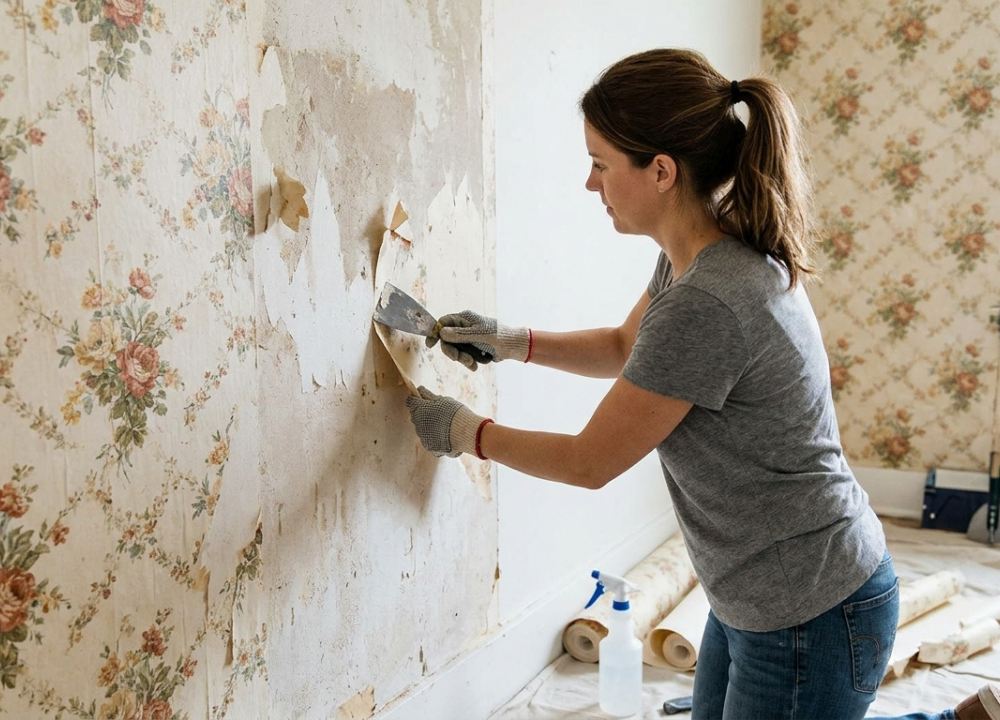
Removing old wallpaper can make a room feel fresh again, but the job is not truly finished when the wallpaper comes down. In many cases, a layer of sticky adhesive remains behind. If you paint over it, the wall may develop rough patches, peeling paint, or an uneven finish.
The good news is that removing wallpaper paste does not have to mean damaging the wall underneath. With the right approach, a little patience, and a few basic tools, most homeowners can get the surface clean and ready for its next finish.
This guide explains how to remove wallpaper glue safely, including what supplies you need, which methods work best, how to deal with stubborn residue, and how to prepare the wall for painting.
What Is Wallpaper Glue and Why Should You Remove It?
Wallpaper glue, also called wallpaper paste, is an adhesive designed to keep wallpaper attached to a wall. Depending on the wallpaper’s age and installation method, the adhesive may be made from starch, cellulose, clay, vinyl-based materials, or synthetic compounds. After wallpaper is stripped away, some paste can remain as a thin film. It may not look serious at first, but even a small amount can affect your next decorating project.
What Happens If Wallpaper Glue Is Left on the Wall?
Painting directly over adhesive residue can create several problems:
- Paint may not bond properly.
- The surface can feel rough or tacky.
- Glue patches may become visible through the paint.
- Paint can bubble, crack, or peel.
- The finished wall may have inconsistent texture.
Why Old Wallpaper Glue Can Be Difficult to Remove
Older adhesive can become hard and firmly attached over time. Multiple wallpaper layers may also leave behind several coats of paste. In some cases, previous attempts to paint or repair the wall can make the residue even harder to identify. The condition of the wall matters, too. Drywall can be more vulnerable to excessive moisture and aggressive scraping than plaster.
What You Need to Remove Wallpaper Glue
You do not necessarily need expensive equipment for a typical wallpaper glue removal project.
Essential Tools and Supplies
Gather the following before starting:
- Warm water
- Bucket
- Sponge
- Spray bottle
- Plastic scraper
- Microfiber cloths
- Mild dish soap
- Rubber gloves
- Clean towels
- Fine-grit sandpaper
Optional Tools for Stubborn Adhesive
For difficult jobs, you may also consider:
- Wallpaper steamer
- Wallpaper scoring tool
- Commercial wallpaper remover
- Flexible putty knife
Prepare the Room First
Move furniture away from the wall and cover the floor with protective material. Water and loosened adhesive can create quite a mess. If you are working near electrical outlets or switches, take appropriate precautions. Avoid allowing water to enter electrical components. Ventilation is also helpful because it allows moisture to evaporate and makes the workspace more comfortable.
How to Remove Wallpaper Glue Step by Step
If you are wondering how to remove wallpaper glue without creating more work, the key is to begin gently and increase the intensity only when necessary.
Step 1: Remove Loose Residue
Before adding water, run your hand lightly over the wall and look for loose flakes or pieces of dried adhesive. Use a dry cloth or a soft scraper to remove anything that comes away easily. There is no reason to wet residue that can already be removed dry.
Step 2: Test a Small Area
Apply a little warm water and wait several minutes. Then gently wipe or scrape the area. This test tells you how the adhesive reacts and whether the wall tolerates moisture well. It is particularly important when working with older drywall or painted surfaces.
Step 3: Soften the Glue With Warm Water
Dip a sponge into warm water, wring it out, and gently apply it to the adhesive. You can also use a spray bottle for more controlled application. Give the moisture time to soften the paste. Avoid flooding the wall. The objective is to loosen the adhesive rather than saturate the wall material.
Step 4: Gently Scrape the Softened Adhesive
Once the glue becomes soft, use a plastic scraper to lift it from the surface. Work in small sections rather than trying to clean the entire wall at once. Hold the scraper at a shallow angle and use controlled pressure. If the glue does not move easily, apply more warm water and wait a little longer instead of forcing the scraper.
Step 5: Wipe the Surface Clean
After scraping, wipe the area with a clean, damp sponge or microfiber cloth. Rinse the cloth frequently because a dirty cloth can simply spread adhesive around the wall. Change the water when it becomes cloudy or filled with residue.
Step 6: Repeat Where Necessary
Some areas may require two or three passes. This is normal, especially around seams, corners, and places where wallpaper overlapped. Reapply warm water and allow the adhesive to soften before wiping again. Patience is usually safer than aggressive scraping.
Best Methods for Removing Wallpaper Glue
There is no single method that works perfectly for every wall. The right choice depends on the type of adhesive, its age, and the condition of the surface.
Warm Water Method
For many common wallpaper pastes, warm water is the simplest starting point. It is inexpensive, easy to control, and does not require specialized chemicals. Apply it gradually and give the adhesive enough time to soften.
Warm Water and Mild Dish Soap
If plain water is not enough, a small amount of mild dish soap can help loosen stubborn residue. Mix a modest amount into warm water and apply it with a sponge. Avoid making the wall excessively wet. Always rinse the surface afterward to remove soap residue.
Commercial Wallpaper Glue Remover
Commercial wallpaper removers can be useful when traditional methods are not enough. Follow the manufacturer’s directions carefully. Before treating the entire wall, test the product in a small area to check how the surface responds. Different products have different application requirements, so avoid assuming that one formula works the same way as another.
Steam Removal
Steam can soften stubborn wallpaper adhesive and make it easier to scrape away. However, steam introduces significant heat and moisture. Using too much can damage drywall, loosen paint, or affect the surface beneath the adhesive. For that reason, steam should be used carefully and only when necessary.
Light Sanding
Sanding can be helpful for tiny amounts of residue that remain after washing and scraping. Use fine-grit sandpaper and apply light pressure. The goal is to smooth the surface, not remove layers of drywall or paint. Always clean away sanding dust before priming.
How to Remove Wallpaper Glue From Different Wall Surfaces
The wall material can significantly affect your technique.
Removing Glue From Drywall
Drywall requires extra care because its paper surface can be damaged by excess water or aggressive scraping. Use controlled moisture and gentle tools. If the drywall paper starts to lift, stop and allow the area to dry before deciding how to repair it.
Removing Glue From Plaster Walls
Plaster can generally handle moisture differently from drywall, but that does not mean it should be soaked. Start with the same gentle approach and increase your efforts only when necessary.
Removing Glue From Painted Walls
Painted surfaces require testing because moisture and scrubbing can affect some finishes. Work slowly and avoid abrasive tools that could remove the paint underneath the adhesive.
Removing Glue From Older or Fragile Walls
Older walls may have several layers of paint, plaster, or previous repairs. If the surface begins to deteriorate, stop rather than continuing to scrape. Preserving the wall is more important than removing every trace of adhesive in one pass.
How to Remove Stubborn Wallpaper Glue
Sometimes you will encounter adhesive that refuses to cooperate. Knowing how to remove wallpaper glue in these situations means understanding when to change techniques rather than simply applying more force.
Why Is Some Wallpaper Glue So Difficult to Remove?
Common reasons include:
- The adhesive has hardened with age.
- Several layers of wallpaper were installed.
- Strong commercial paste was used.
- The wallpaper was removed incorrectly.
- Glue has been painted over.
- The adhesive has been exposed to heat or dried for many years.
Use a Gradual Removal Strategy
Start with warm water. If that fails, try a mild soap solution. For particularly stubborn areas, consider a commercial wallpaper remover or carefully controlled steam. This gradual approach reduces the risk of damaging the underlying surface.
Know When to Stop Scraping
If you see drywall paper coming away, deep scratches appearing, or plaster beginning to crumble, stop. Removing a little extra glue is not worth creating a large wall repair.
Common Mistakes to Avoid
Learning how to remove wallpaper glue is partly about knowing what not to do.
Scraping Too Aggressively
A sharp tool and excessive pressure can gouge drywall or remove paint. Use a flexible scraper and let moisture do most of the work.
Using Too Much Water
More water does not necessarily mean faster removal. Excess moisture can penetrate drywall, soften its paper surface, and create additional problems.
Applying Excessive Heat
Steam can be useful, but too much heat can damage paint or wall materials. Keep the process controlled and follow equipment instructions.
Skipping the Test Area
A method that works beautifully on one wall may behave differently on another. Always test first, especially when using chemicals or steam.
Painting Over Glue
This is one of the most common shortcuts that causes problems later. Even a thin layer of adhesive can interfere with paint adhesion and produce an uneven finish.
How to Tell If All the Wallpaper Glue Is Gone
After cleaning, inspect the wall carefully. Run your hand lightly across the surface. It should feel smooth rather than sticky or waxy.
Look for:
- Shiny patches
- Dark or discolored areas
- Sticky spots
- Rough adhesive buildup
- Uneven texture
How to Repair Wall Damage After Glue Removal
Even careful work can reveal minor imperfections that were hidden beneath the wallpaper.
Fix Small Scratches and Gouges
Apply an appropriate wall filler or joint compound to shallow imperfections. Let it dry according to the product instructions, then sand the repaired area lightly.
Repair Damaged Drywall Paper
If the drywall paper has been torn, avoid continuing to wet or scrape the area. The damaged section may need to be sealed and repaired before applying joint compound and primer.
How to Prepare the Wall for Painting
Once you know how to remove wallpaper glue, the next goal is creating a surface that paint can bond to properly.
Clean the Surface
Before painting, make sure the wall is free from any remaining wallpaper adhesive, dirt, dust, or soap residue. A clean surface helps primer and paint bond properly and creates a more even finish.
Allow Complete Drying
Never apply primer to a damp wall. Give the surface enough time to dry completely, especially if you used water or a wallpaper remover during the cleaning process. Good airflow can help speed up drying.
Sand Rough Areas
Once the wall is dry, lightly sand any rough patches, repaired spots, or uneven areas with fine-grit sandpaper. Avoid excessive sanding, particularly on drywall, as it can damage the surface.
Apply Primer
Apply a suitable primer to create a consistent base for your paint. If the wall contains repairs, stains, or areas where the previous finish was removed, choose a primer designed to handle those conditions.
DIY vs. Professional Wallpaper Glue Removal
| Factor | DIY Removal | Professional Removal |
| Cost | Usually lower | Usually higher |
| Small areas | Good choice | Often unnecessary |
| Large rooms | More time required | Usually more efficient |
| Stubborn adhesive | May require patience | Specialized equipment may help |
| Fragile walls | Requires careful technique | Experienced handling |
| Repairs | Basic repairs possible | Better for extensive damage |
Tips for Safer Wallpaper Glue Removal
Keep these practical tips in mind:
- Start with the gentlest effective method.
- Always test your method first.
- Work in small sections.
- Keep moisture under control.
- Use plastic tools when possible.
- Let stubborn glue soften instead of forcing it.
- Rinse away cleaning residue.
- Allow the wall to dry completely.
- Repair damaged areas before painting.
- Inspect the finished surface carefully.
Final Thoughts
Learning how to remove wallpaper glue does not require rushing or using the strongest product available. In most cases, the safest strategy is to start with warm water, give the adhesive time to soften, and gently remove it in small sections. For stubborn residue, you can gradually move to mild soap, commercial wallpaper remover, steam, or light sanding when appropriate. The most important thing is to protect the wall underneath. Excessive water, aggressive scraping, and heavy sanding can turn a simple cleaning project into a repair job. Once the adhesive is gone, allow the wall to dry completely, repair any imperfections, and apply the appropriate primer before painting. A little patience during glue removal can make a significant difference in the final appearance of your room.
FAQs
Q1: What is the easiest way to remove wallpaper glue?
Ans: For many walls, warm water and a sponge are the easiest starting point. Allow the water to soften the adhesive, then gently scrape or wipe it away. More stubborn residue may require mild soap, commercial remover, or another method.
Q2: Can I remove wallpaper glue with just water?
Ans: Yes, many water-based wallpaper pastes can be softened with warm water. However, old or hardened adhesive may need repeated applications or a suitable wallpaper-removal product.
Q3: What dissolves old wallpaper glue?
Ans: Warm water can soften many types of wallpaper paste. A mild soap solution or commercial wallpaper remover may help with more stubborn residue. Always test a small area before treating the entire wall.
Q4: Can vinegar remove wallpaper glue?
Ans: A diluted vinegar solution is sometimes used as a household cleaning option, but its effectiveness varies depending on the adhesive. Test it on an inconspicuous area first and avoid assuming it is suitable for every wall finish.
Q5: How do I remove wallpaper glue from drywall?
Ans: Use controlled amounts of warm water, allow the adhesive to soften, and gently scrape it with a plastic tool. Avoid soaking the drywall because excessive moisture can damage its paper surface.
