

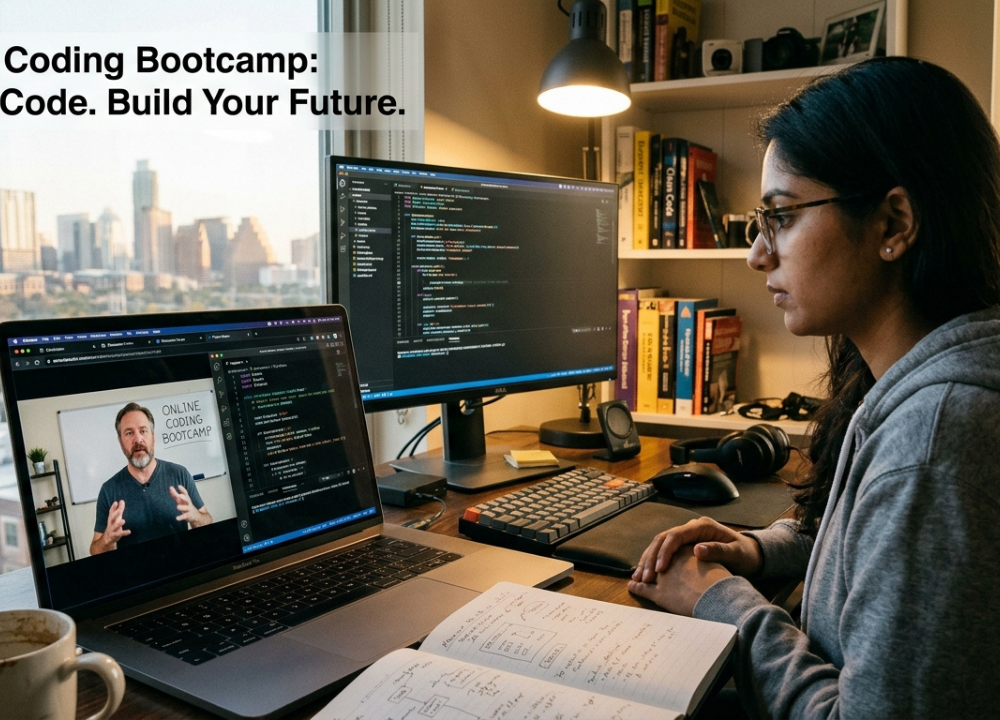
Learning to code can open doors to new career opportunities, creative projects, and technical skills that are useful in many industries. However, with so many online courses and training programs available, choosing the right one can feel overwhelming. Some programs focus on web development, while others teach Python, software engineering, or full-stack development. Their prices, schedules, teaching methods, and career support can also differ significantly.
The best online coding bootcamp is not necessarily the most expensive or the most popular option. It is the program that matches your current skill level, learning style, budget, and professional goals. By comparing course content, instructor support, practical projects, and student feedback, you can make a more informed decision before investing your time and money.
What Is an Online Coding Bootcamp?
An online coding bootcamp is a structured training program designed to teach programming and related technical skills. Unlike a traditional computer science degree, which typically covers a broader range of academic subjects, many bootcamps concentrate on practical skills that students can apply to projects and entry-level technical work.
How Online Coding Bootcamps Work
Most programs organize their curriculum into modules that gradually introduce more challenging concepts. Beginners might start with programming fundamentals before moving on to databases, application development, or more advanced topics. Students usually learn by combining theory with practice. For example, someone studying web development may learn HTML and CSS before using JavaScript to create interactive websites. Later, they might build a complete project that demonstrates their progress.
Who Should Consider a Coding Bootcamp?
Online coding bootcamps can suit several types of learners:
- Complete beginners: People who want a structured introduction to programming.
- Career changers: Professionals exploring opportunities in software development or web development.
- Working adults: Learners who need flexible study arrangements around existing responsibilities.
- Students: People who want additional practical experience alongside formal education.
- Existing developers: Professionals who want to strengthen a particular skill or learn a new technology.
Why Choosing the Right Coding Bootcamp Matters
A coding bootcamp requires more than simply watching lessons. You need time to practice, solve problems, understand errors, and apply what you learn. The right program can provide structure and support throughout this process.
Building Practical Programming Skills
Programming becomes easier to understand when you use it to solve real problems. A strong curriculum should include exercises and projects that require you to apply concepts rather than memorize definitions. For example, a beginner might create a personal portfolio website, while a more advanced learner might build a database-driven application. These projects help develop problem-solving skills and provide evidence of practical ability.
Preparing for Career Opportunities
Some students enroll because they hope to work as web developers, software developers, or junior programmers. A suitable program can help them develop relevant skills and prepare projects for a portfolio. However, completing a bootcamp does not guarantee employment. Hiring outcomes depend on technical ability, interview performance, experience, location, employer expectations, and market conditions. Treat career support as a useful resource rather than a promise of a job.
Getting Value for Your Time and Money
The cheapest program is not always the best value, and a higher price does not automatically indicate superior quality. Compare the curriculum, instructor access, feedback, project opportunities, and total cost. Also consider the time commitment. A course that looks affordable may be difficult to complete if its schedule conflicts with your job or family responsibilities. Choosing a realistic program improves your chances of finishing it and retaining what you learn.
Key Factors to Consider When Choosing a Coding Bootcamp
When comparing the best online coding bootcamp options, focus on the quality and suitability of the training rather than advertising claims alone.
Review the Course Curriculum
The curriculum should match your intended learning path. A web development course, for example, may cover HTML, CSS, JavaScript, responsive design, version control, and frameworks. A Python-focused program may introduce variables, functions, data structures, testing, and application development. Check whether the course explains prerequisites and learning outcomes. You should understand what you are expected to know before starting and what you should be able to do after completing each module.
Check Instructor Experience and Mentorship
Good instruction involves more than explaining programming concepts. Instructors should help learners understand why their code works, identify errors, and develop effective problem-solving habits. Look for information about instructors’ technical backgrounds and teaching experience. Find out whether you can ask questions, receive feedback on assignments, attend office hours, or participate in mentoring sessions. Individual code reviews can be particularly valuable because they may reveal issues involving readability, organization, testing, and maintainability that beginners often overlook.
Compare Live Classes and Self-Paced Learning
Live classes provide scheduled instruction, opportunities to ask questions, and interaction with classmates. Self-paced courses allow learners to study at convenient times and revisit difficult material. Some programs combine both formats. Before choosing, ask whether recorded sessions are available, how quickly instructors answer questions, and whether missed classes affect your progress.
Look for Hands-On Projects
Projects are an important part of learning to code because they turn abstract concepts into practical experience. A useful course should gradually move beyond isolated exercises and help you create working applications or websites. Look for projects that involve planning, writing code, testing functionality, fixing bugs, and documenting your work. Ideally, you should finish with several projects that demonstrate different skills.
Read Independent Reviews
Student reviews can reveal useful details about teaching quality, platform usability, workload, and customer support. Look for repeated patterns across multiple sources instead of relying on a single positive or negative comment. Pay attention to specific experiences. For example, several reports of delayed instructor responses may deserve further investigation. Similarly, detailed reviews explaining how a course helped someone complete a project are more informative than vague praise.
Compare Coding Bootcamp Costs and Payment Options
Tuition is an important consideration, but it should be evaluated alongside the features included in the program. Before paying, calculate the total expected cost and check the conditions attached to any financing offer.
Understand Tuition and Additional Expenses
Potential costs include:
- Course tuition and enrollment fees.
- Required software, equipment, or cloud services.
- Optional tutoring or additional learning resources.
- Assessment or certification fees, where applicable.
- Financing charges or interest, if you borrow money.
Explore Scholarships and Payment Plans
Some providers offer scholarships, installment plans, or other financing arrangements. Eligibility requirements and availability vary, so read the official terms carefully. If you choose a payment plan, check the repayment schedule, interest rate, late fees, and cancellation conditions. Do not assume that a financing arrangement is affordable simply because the initial payment is small.
Decide Whether the Price Is Worth It
To judge value, compare what you receive with what you could achieve through other learning options. Free tutorials, books, documentation, and low-cost online courses may be sufficient for highly independent learners. A paid bootcamp may offer additional value through structured lessons, personal feedback, accountability, and career preparation. The decision should depend on whether those benefits address your needs and justify the expense.
Which Online Coding Bootcamp Fits Your Goals?
Different programs serve different purposes. Before choosing the best online coding bootcamp for your situation, identify the type of work or skill you want to pursue.
Coding Bootcamps for Beginners
If you have no programming experience, choose a course that starts with basic concepts and explains them clearly. Look for guided exercises, regular practice, accessible support, and realistic expectations about progress. A beginner course should not assume that you already understand variables, loops, functions, or debugging. A gradual learning path can help you develop confidence before tackling more complex projects.
Web Development Bootcamps
Web development programs often cover front-end technologies such as HTML, CSS, and JavaScript. More comprehensive programs may also include back-end programming, databases, APIs, testing, and deployment. If you want to build websites or web applications, review the projects and technologies included in the syllabus. Choose a program that teaches you to create functional, accessible, and responsive experiences rather than focusing only on copying examples.
Python and Software Development Bootcamps
Python can be a useful starting language because its syntax is generally readable. Depending on the curriculum, Python training may lead into automation, scripting, data analysis, backend development, or other technical subjects. For software development, look for instruction in functions, data structures, debugging, testing, version control, and software design. A strong course should help you understand the principles behind the tools rather than simply follow step-by-step instructions.
Bootcamps for Career Changers and Working Professionals
Career changers may benefit from structured projects, mentoring, and guidance on presenting transferable skills. Working professionals may prefer part-time schedules, recorded lessons, and flexible deadlines. Compare the weekly workload with your existing commitments. A demanding program can be difficult to complete alongside a full-time job, especially if it expects substantial independent practice outside scheduled lessons.
How to Evaluate a Bootcamp Before Enrolling
Before committing to a program, use a practical evaluation process instead of relying on marketing materials.
Review the Syllabus and Entry Requirements
Read the syllabus carefully and check whether it covers the skills you want to develop. Look for specific modules, project descriptions, assessments, and expected learning outcomes. Confirm whether you need previous programming knowledge, particular software, or a computer that meets certain technical requirements.
Try a Free Lesson
A sample lesson can help you evaluate the teaching style and course platform. Notice whether the explanations are clear, the exercises are useful, and the difficulty level feels appropriate. If you struggle with a sample lesson, that does not necessarily mean the course is unsuitable. Consider whether the provider offers introductory material or support for beginners.
Ask About Career Support and Employment Statistics
If a program advertises career services, find out exactly what they include. Services might cover resume feedback, mock interviews, portfolio reviews, networking events, or job-search guidance. Ask how any employment statistics are calculated, which graduates are included, and how long after graduation the results are measured. Check the definitions behind claims such as job placement or salary increases.
Read the Refund and Cancellation Policy
Review the enrollment agreement before making a payment. Pay attention to refund deadlines, cancellation requirements, financing obligations, and rules for withdrawing from the course. Save a copy of the terms and any important written promises. Clear policies help you understand your options if your circumstances change.
Online Coding Bootcamp Comparison Table
Use the following table as a starting point when comparing program formats. Actual features depend on the provider.
| Factor | Self-Paced Program | Live Online Program | Part-Time Program |
| Schedule | Study at your own pace | Set class times | Designed around limited weekly hours |
| Instructor access | Varies by provider | Often available during classes | Depends on the course |
| Learning speed | Flexible | Usually cohort-based | Spread over a longer period |
| Accountability | Requires self-discipline | Regular scheduled sessions | Depends on deadlines and support |
| Main advantage | Maximum flexibility | Direct interaction | Easier to balance with other commitments |
| Potential challenge | Staying motivated | Scheduling conflicts | Longer completion time |
Common Mistakes to Avoid When Choosing a Coding Bootcamp
Even a well-designed program may not be the right fit if you select it for the wrong reasons. Avoid these common mistakes.
Choosing Only by Price
A low price can be attractive, but check the curriculum, support, and total costs before deciding. An inexpensive course may meet your needs, while an expensive one may include features you will rarely use.
Believing Every Job Placement Claim
Be cautious about guaranteed employment or unusually impressive salary claims. Verify the written conditions, graduate outcomes, and eligibility rules. A certificate alone cannot guarantee a job.
Underestimating the Time Commitment
Learning programming requires repeated practice and patience. Before enrolling, estimate how many hours you can realistically study each week and account for assignments and projects.
Ignoring Practical Work
A course that focuses heavily on passive video lessons may not provide enough experience solving problems independently. Check that you will write code, fix errors, and build projects throughout the program.
How to Succeed After Enrolling
Choosing a suitable program is only the first step. Your progress will depend on consistent practice, curiosity, and a willingness to learn from mistakes.
Create a Realistic Study Schedule
Set regular study sessions and divide larger topics into manageable goals. For example, you might dedicate one session to learning a concept and another to applying it in a small project. Consistency is generally more useful than occasional long study sessions followed by extended breaks.
Build Projects Beyond the Lessons
Once you understand the basics, try creating a small project without following a complete tutorial. You could build a personal website, a simple task manager, or a basic budgeting application. Independent projects help you discover gaps in your knowledge and practice finding solutions. Keep notes about the challenges you face and how you resolve them.
Practice Problem-Solving and Technical Interviews
If your goal is a development job, practice explaining your code and describing your decisions. Learn to break complex problems into smaller steps, test possible solutions, and discuss trade-offs. Interview preparation should complement, not replace, the practical work needed to become a capable developer.
Continue Learning After Graduation
Technology changes, and programming is a skill developed over time. Continue using official documentation, building projects, reviewing other people’s code, and learning from developer communities. A bootcamp can provide a foundation, but continued practice helps turn that foundation into lasting competence.
Final Thoughts
Finding the right coding program starts with understanding what you want to learn and why. Review the curriculum, compare learning formats, investigate instructor support, and evaluate the quality of practical projects. Consider the full cost and check any claims about career outcomes before making a commitment. The best online coding bootcamp for one learner may not be the right choice for another. Beginners may need additional guidance, working professionals may require flexible schedules, and aspiring developers may prioritize project-based training and portfolio development.
FAQs
Q1: What is the best online coding bootcamp for beginners?
Ans: The best program for beginners offers clear explanations, a structured curriculum, practical coding exercises, and access to help when needed. Choose one that matches your goals and does not require programming experience you do not have.
Q2: How much does an online coding bootcamp cost?
Ans: Costs vary depending on the provider, course length, instructor support, and learning format. Compare total tuition, additional fees, and financing terms before enrolling rather than judging a program by its advertised starting price.
Q3: Can I join a coding bootcamp without experience?
Ans: Yes. Many bootcamps are designed for beginners and start with programming fundamentals. Check the entry requirements and consider taking an introductory course if you want to become comfortable with basic concepts first.
Q4: How long does an online coding bootcamp take?
Ans: Completion time ranges from a few weeks to several months or longer. It depends on the curriculum, weekly study hours, learning format, and your starting knowledge. Review the expected workload before choosing a schedule.
Q5: Can a coding bootcamp help me get a job?
Ans: A bootcamp can help you build technical skills, complete portfolio projects, and prepare for interviews. However, employment is not guaranteed and depends on your abilities, experience, job market, and the requirements of individual employers.
